
Establish the plant basis
Define the unit, assessment boundary, target coverage and the Fire & Gas credit already being claimed.

Verification method
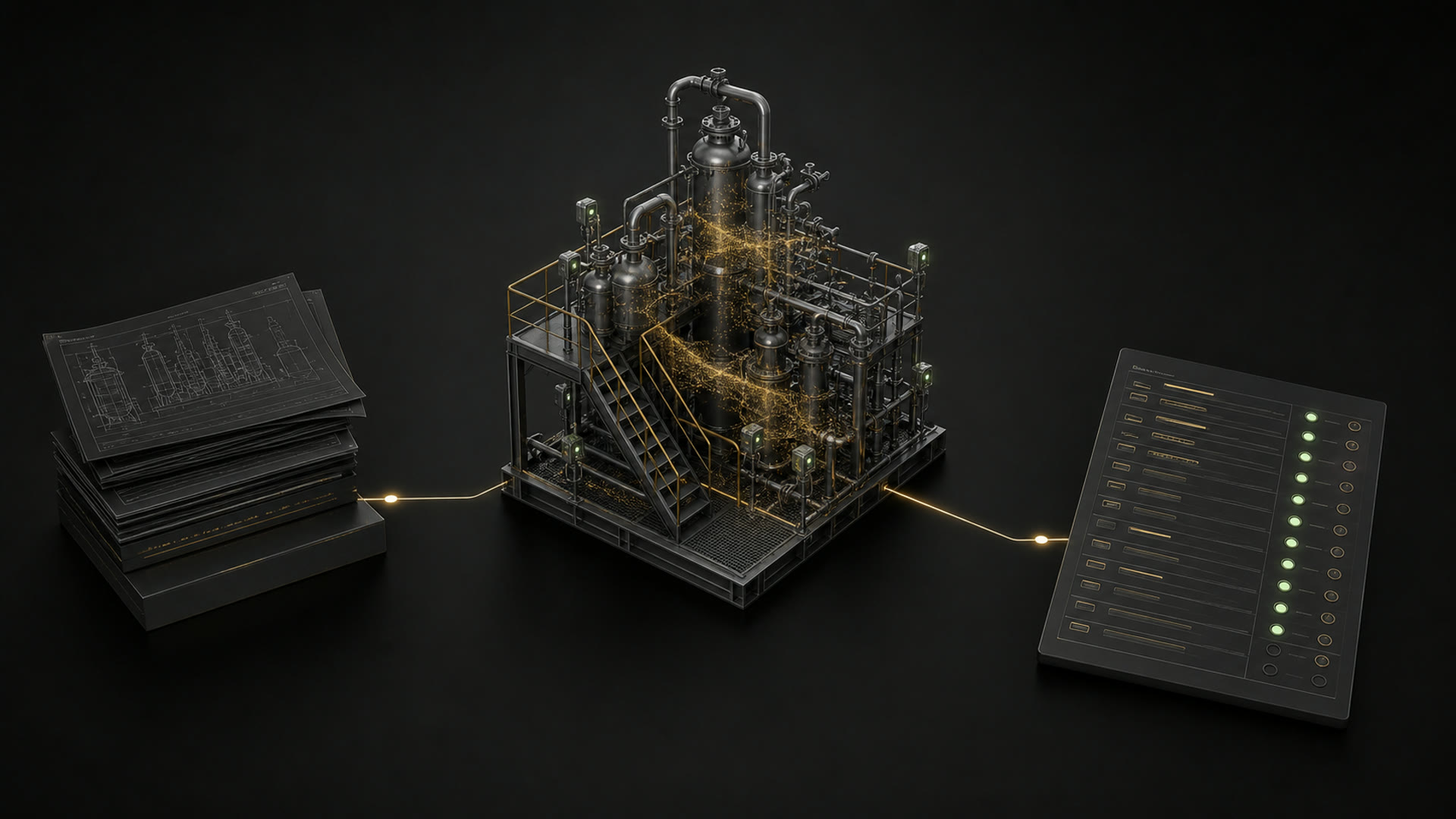
Barrier Intelligence connects each conclusion back to the source document, spatial assumption, physical scenario and detector response that produced it. The result can be checked, challenged and signed.
The golden path
The three stages, Reconstruct, Sweep and Verdict, expand into six controlled steps. The system accelerates the engineering work while keeping the judgement visible and reviewable.
Define the unit, assessment boundary, target coverage and the Fire & Gas credit already being claimed.
Parse the HAZOP, LOPA, philosophy, register, mapping report and drawings with page-level provenance.
Align leak nodes, detector coordinates, obstructions and voting logic to the 3D plant model.
Test releases across wind direction, speed, stability and geometry-driven dispersion behaviour.
Allow only physical performance to earn credit; evidence confidence can demote a verdict but never promote it.
Export the register, overlays, gaps, remediation priorities, method and limitations for engineer sign-off.
Three kinds of truth
Each stage answers a different question before the barrier verdict can be trusted.
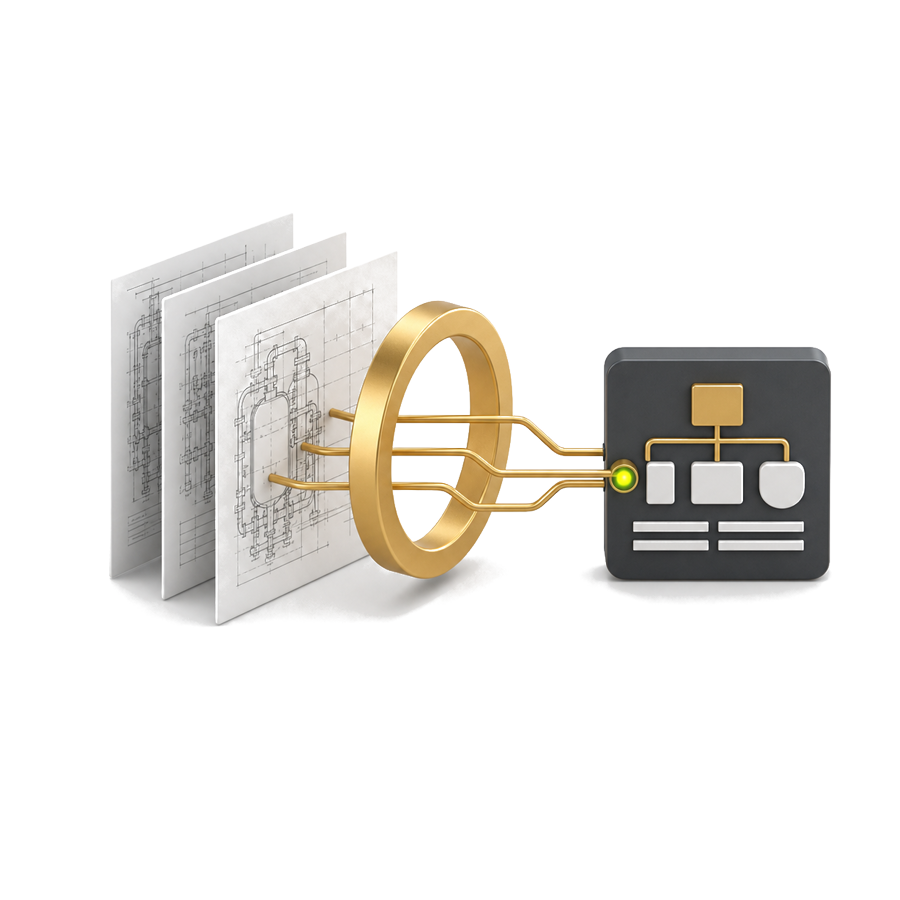
Turn scenarios, assumptions and detector data into a structured basis without losing the document, page or revision behind each fact.
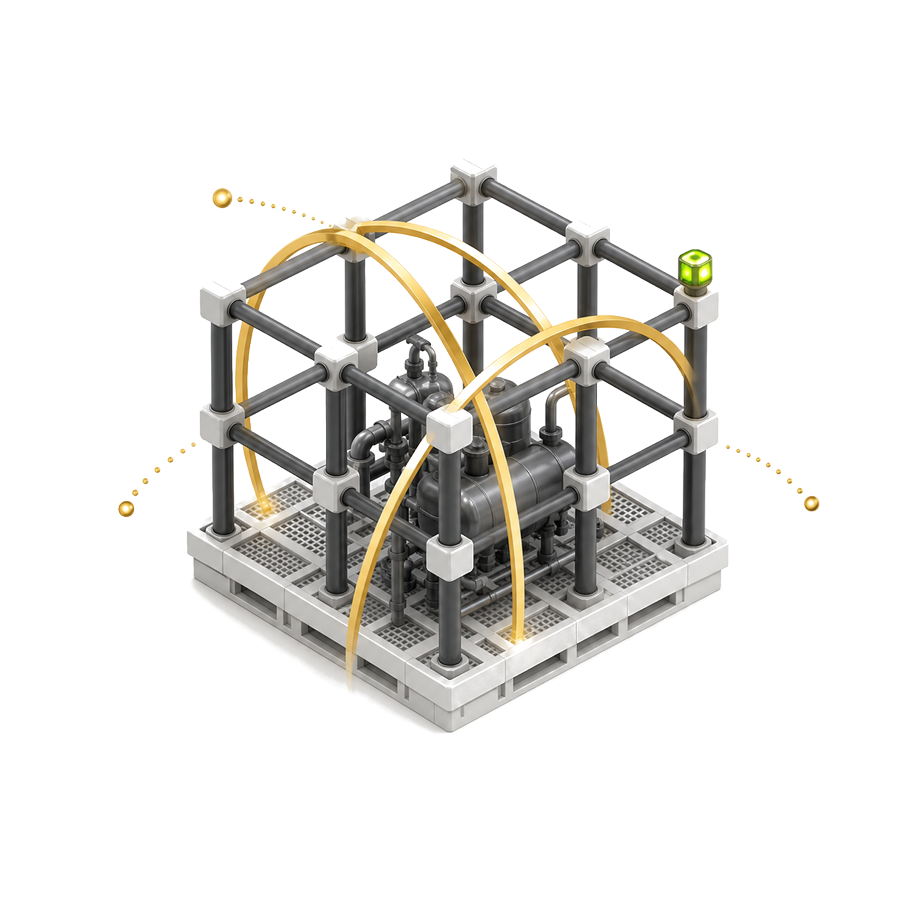
Test release behaviour through the plant geometry, detector field and full relevant wind space instead of relying on nominal reach.
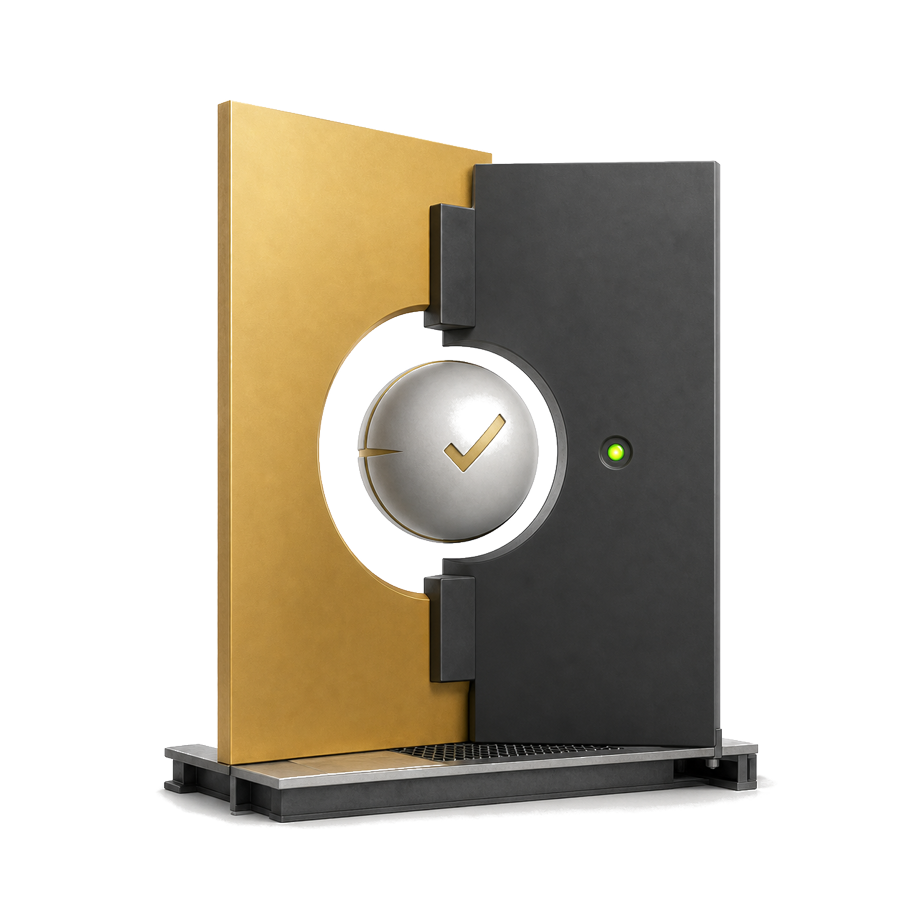
Let demonstrated detector response determine the state, then retain limitations, evidence quality and engineering authority around it.
Two coordinated engines
Neither document extraction nor simulation is treated as sufficient on its own.
01 · Document Intelligence
The document engine finds scenarios, detector assumptions, voting claims and risk-reduction credit without obscuring the original source.
02 · Spatial and physics
The spatial engine resolves the relationship between the release, plant geometry, detector field and time-to-detect.
Solver selection
The credit wall
Barrier Intelligence separates calculation from engineering authority so the final claim stays honest.
Only demonstrated detector response can earn a credited state.
Weak or conflicting evidence moves a result toward caution, never optimism.
The method, limitations and final disposition remain visible to the qualified reviewer.
See the output
The evidence model is designed for technical review, audit and sign-off.
Explore the evidence